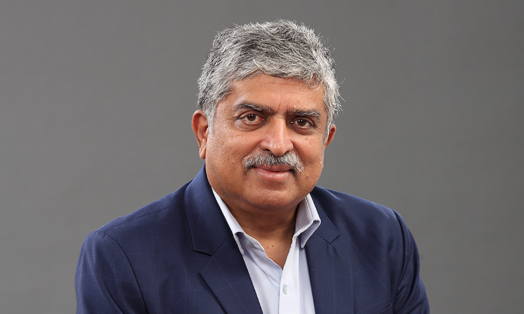
Nandan Nilekani – Infosys Co-founder and
Architect of Aadhaar
Introduction
Nandan Nilekani is one of the most influential figures in India’s modern economic and technological history. As the co-founder of Infosys, one of India’s most successful IT companies, and the visionary behind the Aadhaar project, Nilekani’s contributions extend far beyond corporate boardrooms. His life story is a journey of determination, intellect, and innovation that transformed not only the Indian IT industry but also the way millions of Indians interact with government services.
Born into a modest family in Karnataka, Nilekani rose to become a global leader in technology and policy. His career spans entrepreneurship, public service, and philanthropy. His ability to bridge the gap between technology and governance has positioned him as a rare leader who can seamlessly navigate both business and public administration.
This detailed biography explores Nandan Nilekani’s early life, teenage years, education, career, achievements, challenges, philanthropy, and the lasting legacy he continues to build.
Early Life
Nandan Nilekani was born on 2 June 1955 in Sirsi, a small town in Karnataka. His father, Durga Nilekani, worked with the Indian Textile Industry, and his mother, Durga, was a homemaker. The family later moved to Bangalore, where Nandan spent much of his childhood.
Growing up in a middle-class household, Nandan was taught the value of hard work, discipline, and education. His father’s job in the textile sector exposed him to the complexities of industry and commerce, while his mother nurtured his curiosity and love for books.
As a child, Nandan was known for being quiet, thoughtful, and highly inquisitive. He loved to read newspapers, magazines, and novels, often spending hours absorbing knowledge about science, politics, and economics. This early intellectual environment set the stage for his future as a problem solver and visionary leader.
Teenage Years
Nandan Nilekani’s teenage years were pivotal in shaping his personality. He attended Bishop Cotton Boys’ School in Bangalore, one of the city’s most prestigious institutions, where he developed an interest in debate, current affairs, and leadership.
As a teenager, Nandan displayed a keen interest in both mathematics and literature. He was equally fascinated by numbers and narratives, an unusual blend that later helped him in both technology and governance. His teachers admired his sharp analytical skills and his ability to think beyond textbooks.
During his teenage years, Nandan also faced personal challenges. His father passed away when Nandan was just 12, a tragedy that placed significant responsibility on his shoulders. This loss made him mature faster than most of his peers and instilled in him a deep sense of resilience and independence.
Despite the emotional setback, Nandan remained focused on his studies. He participated in debates, essay competitions, and quiz contests, which honed his communication and leadership abilities. His teenage years were marked by a determination to excel, a thirst for knowledge, and the early signs of a leader who would one day transform industries.
Education
After completing his schooling, Nandan Nilekani pursued higher education at St. Joseph’s High School and later St. Joseph’s College, Bangalore, where he studied science. His academic performance was exceptional, and he soon secured admission to one of India’s most prestigious institutions—the Indian Institute of Technology (IIT) Bombay.
At IIT Bombay, Nandan pursued a degree in Electrical Engineering, graduating in 1978. His time at IIT was transformative. Surrounded by some of the brightest minds in the country, he not only honed his technical skills but also developed a passion for problem-solving and entrepreneurship.
At IIT, Nandan was exposed to a wide variety of ideas and experiences. He actively participated in student activities, cultural programs, and technical projects. The exposure to teamwork, competition, and leadership during these years became the bedrock of his future career.
Graduating from IIT Bombay with distinction, Nandan entered the corporate world at a time when India was still a closed economy, and opportunities in technology were limited. However, his determination and vision soon found the right platform.
Career
Nandan Nilekani began his career at Patni Computer Systems in Pune, where he worked under Narayana Murthy. It was here that he developed a close professional bond with Murthy, which eventually led to the founding of Infosys.
In 1981, Nandan Nilekani, along with Narayana Murthy and five other colleagues, co-founded Infosys with a small capital of Rs. 10,000. Infosys was created with the vision of making India a global leader in software services.
Over the years, Nandan played a pivotal role in shaping Infosys into a global IT giant. He served in various leadership roles, including Managing Director, President, and eventually CEO and Managing Director from 2002 to 2007. Under his leadership, Infosys expanded globally, strengthened its reputation for corporate governance, and achieved remarkable financial growth.
After stepping down as CEO, Nilekani took on a new challenge in public service. In 2009, he was appointed the Chairman of the Unique Identification Authority of India (UIDAI), where he spearheaded the Aadhaar project. Aadhaar became the world’s largest biometric identification system, giving millions of Indians access to government services, banking, and digital identity.
Later, Nandan returned to Infosys in 2017 as Non-Executive Chairman, providing stability to the company during a period of leadership transition.
Achievements
Nandan Nilekani’s achievements span across business, governance, and social impact.
-
Co-founding Infosys – Built Infosys into a global IT powerhouse.
-
CEO of Infosys – Led Infosys during its crucial growth years (2002–2007).
-
Aadhaar Project – As UIDAI Chairman, spearheaded Aadhaar, now used by over 1.3 billion Indians.
-
Author – Wrote influential books including Imagining India and Rebooting India.
-
Policy Influence – Advised the government on technology-driven governance reforms.
-
Recognition – Named one of the “100 Most Influential People in the World” by Time Magazine in 2009.
-
Philanthropy – Donated significant portions of his wealth to causes in education, health, and digital inclusion.
Challenges
Nandan Nilekani’s journey was not without obstacles.
-
Economic Climate – Starting Infosys in the early 1980s, when India’s economy was highly regulated, was extremely challenging.
-
Leadership Pressure – As CEO of Infosys, he had to manage global competition and investor expectations.
-
Aadhaar Criticism – Despite its success, Aadhaar faced criticism regarding privacy concerns, technical glitches, and political opposition.
-
Balancing Public and Private Roles – Moving from corporate leadership to public service required adaptability and resilience.
Yet, Nilekani’s ability to stay calm under pressure, embrace innovation, and focus on long-term goals helped him overcome these challenges.
Legacy
Nandan Nilekani’s legacy lies in his dual impact—on India’s IT industry and on governance through Aadhaar. At Infosys, he was instrumental in creating a company that became a symbol of India’s technological rise. Through Aadhaar, he democratized digital identity and transformed service delivery for millions.
Beyond his professional contributions, Nilekani is admired for his integrity, intellect, and humility. His ability to balance corporate success with public service makes him a role model for future leaders.
Philanthropy
Nandan Nilekani, along with his wife Rohini Nilekani, is deeply committed to philanthropy. They have pledged to donate a large portion of their wealth to charitable causes under the Giving Pledge initiative.
-
Education – Supported initiatives in primary and higher education, particularly technology-enabled learning.
-
Health – Contributed to public health programs and medical research.
-
Digital Inclusion – Advocated for open digital platforms to promote financial inclusion and citizen empowerment.
-
Water Conservation – Rohini Nilekani has championed water-related causes, supported by Nandan’s philanthropy.
Their philanthropic philosophy is rooted in systemic change rather than short-term charity, aiming to create long-term impact.
Conclusion
Nandan Nilekani’s life story is an inspiring blend of entrepreneurship, innovation, and public service. From co-founding Infosys to spearheading the Aadhaar project, he has continuously shaped India’s technological and economic landscape. His vision has empowered millions of Indians with opportunities, identity, and access.
As an entrepreneur, author, policymaker, and philanthropist, Nilekani embodies the idea that true leadership is about creating institutions and systems that outlast individuals. His journey proves that when intellect meets integrity and innovation, the results can transform not just companies, but entire nations.