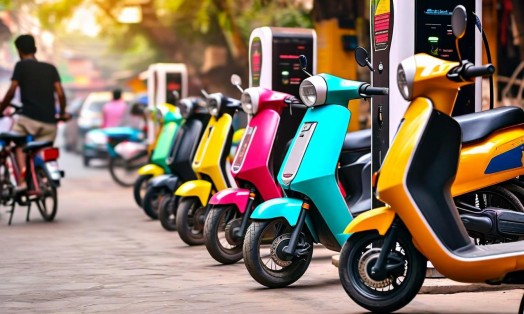
Electric two-wheeler sales are surging rapidly across semi-urban and rural markets in India, marking a significant shift in the country’s mobility landscape. Once considered an urban-centric trend, electric mobility is now gaining strong traction beyond major cities as consumers seek affordable, efficient, and sustainable transportation options.
One of the biggest drivers behind this surge is rising fuel prices, which have increased the cost of daily commuting for rural and semi-urban households. Electric two-wheelers offer substantially lower running costs compared to petrol-powered vehicles, making them an attractive choice for farmers, small traders, delivery workers, and daily commuters who rely heavily on two-wheelers for mobility.
Improved affordability has also played a crucial role. Manufacturers have introduced low-cost electric scooters and motorcycles tailored to the needs of non-metro consumers. Simplified designs, durable build quality, and competitive pricing have made electric two-wheelers accessible to a wider audience, including first-time vehicle buyers in smaller towns and villages.
Government incentives and policy support have further accelerated adoption. Subsidies under electric mobility schemes, reduced registration costs, and exemptions from road taxes have lowered the upfront cost of ownership. State governments are also promoting EV awareness programs and local charging infrastructure, helping build confidence among rural consumers.
Charging accessibility, once a major concern, is gradually improving. Many users in semi-urban and rural areas rely on home charging using standard power connections, which suits daily travel patterns involving shorter distances. Additionally, battery swapping models and localized charging points near markets and highways are addressing range anxiety and convenience issues.
The growing presence of electric two-wheelers is also transforming rural livelihoods. Delivery services, local businesses, and last-mile logistics operators are increasingly switching to electric vehicles to reduce operational costs. This shift is contributing to higher productivity and improved income stability for small entrepreneurs.
Manufacturers and dealers are actively expanding their networks beyond metros, setting up service centers and dealerships in tier-3 towns and rural clusters. This localized presence is critical in building trust, ensuring after-sales support, and encouraging word-of-mouth adoption among close-knit rural communities.
Environmental awareness, though secondary to cost considerations, is also influencing buyer decisions. Reduced noise, zero tailpipe emissions, and alignment with clean-energy goals resonate with communities facing rising pollution and climate-related challenges.
Despite the rapid growth, challenges remain. Limited awareness, concerns over battery life, and uneven infrastructure development still need to be addressed. However, industry players believe that continued innovation, policy support, and falling battery costs will further strengthen adoption.
The surge in electric two-wheeler sales in semi-urban and rural India signals a turning point in the country’s EV journey. As clean mobility becomes more inclusive and accessible, electric two-wheelers are set to play a central role in shaping India’s sustainable transportation future beyond its major cities.